Rural properties use more electricity than most people realize. A well pump running daily, a barn or shop with its own power needs, outbuildings scattered across the property, irrigation, and a home that's often larger than its suburban counterpart all add up. If you own acreage in Sonoma or Napa, your electricity use probably looks nothing like a typical neighborhood home's, and that's exactly why solar tends to work so well out here.
Why rural properties are strong candidates
Two things make a property a good fit for solar: using a fair amount of electricity, and having good space to put panels. Rural properties usually have both in abundance.
The usage side is straightforward. Well pumps are a big one, and they're common across the North Bay's rural areas. A pump that runs daily to supply the house, the livestock, or the irrigation draws real power over a year. Add shops, barns, workshops, cold storage, or equipment, and the total climbs well past what a standard home uses. More usage means more for solar to offset.
The space side is the real advantage. Suburban homes are limited to whatever roof they have. On acreage, you have options: the house roof, a barn or outbuilding roof, or open land for a ground-mounted array. That freedom means we can put panels where the sun is best rather than where the roof happens to face.
Ground mounts and open land
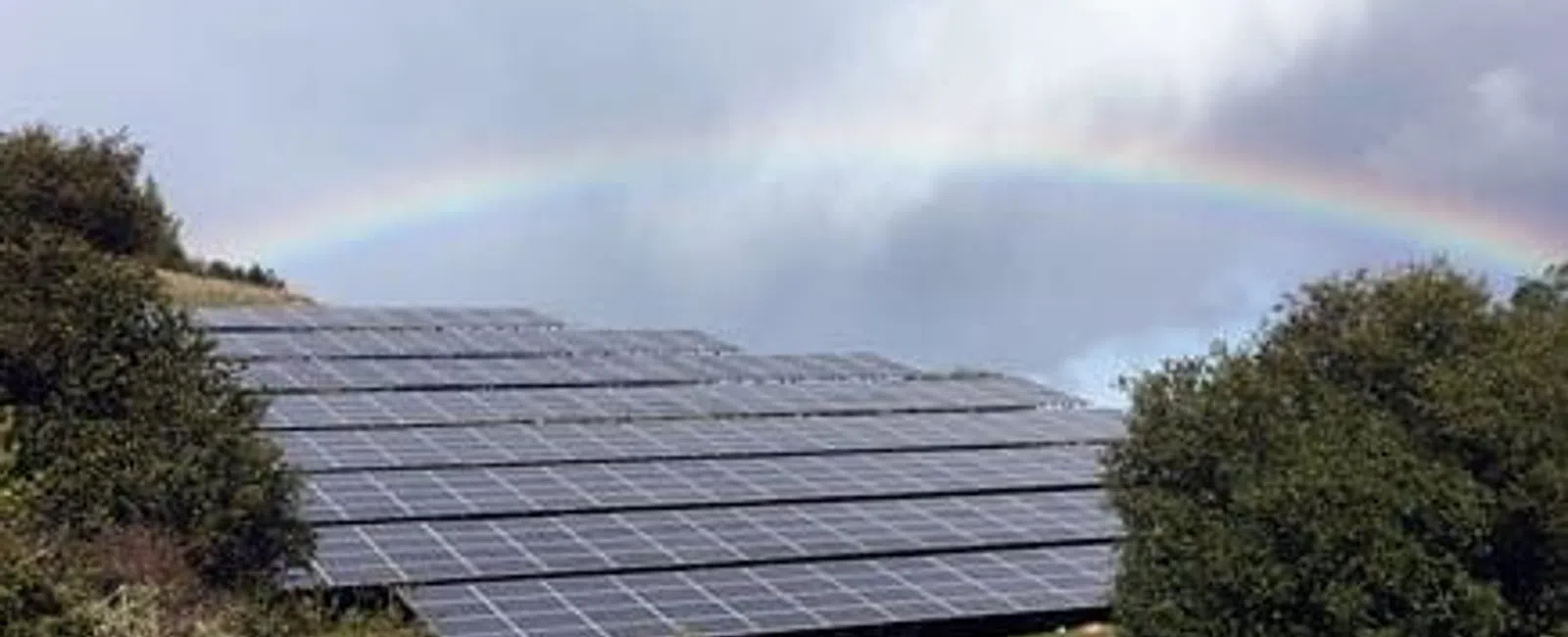
For many rural properties, a ground-mounted array is the best answer. Instead of working with your roof's existing angles, a ground mount can be built at the ideal tilt and aimed in the ideal direction, making excellent use of the sun. It's also easy to reach for cleaning and service, since everything sits at ground level.
Open land also means room to scale. If your property uses a lot of power, or you expect to use more as you add equipment, a well, or an electric vehicle, you're not boxed in by roof space. Our post comparing ground-mount and roof-mount solar walks through how the two stack up, and on rural properties the ground mount often wins on flexibility alone.
That said, roofs still have their place out here. A big barn or shop roof can be an ideal solar surface, and using it keeps your land clear. Often the right answer is a combination, and we design around whatever suits your property best.
Powering the whole property
One thing that sets rural work apart is that a property is rarely just a house. There's often a main home, one or more outbuildings, a well, and sometimes a separate dwelling or guest quarters, each with its own power needs and sometimes its own meter.
Sorting that out is part of the design. We look at how your property is metered, where the power is used, and how everything is wired, then design a system that makes sense for the whole place rather than just the house. On a property with several structures, that planning is what separates a system that works from one that misses half of what you use.
Vineyards, ranches, and agricultural operations
We've done a lot of this work. Across Sonoma and Napa, SolarCraft has designed and installed solar for vineyards and wineries including Hourglass, Pine Ridge, Paloma, Kistler, Duckhorn, Bluerock, and Honig, along with ranches, rural residences, and agricultural operations throughout both counties.
Agricultural operations have their own rhythm, and a good design respects it. Harvest and processing draw heavily at certain times of year, irrigation runs on its own schedule, and cold storage runs constantly. A system designed around those patterns offsets a meaningful portion of what the operation uses, and because the work happens largely during daylight, the timing lines up nicely with when solar produces.
Distance and layout matter too
One practical difference on acreage is distance. When the array sits a good way from the house or the main panel, the wiring run between them becomes part of the design, and it's worth getting right so you don't lose efficiency over a long stretch. Access matters as well, since a crew needs to reach the site to build and later service it. None of this is a problem, but it's the kind of detail that separates a system designed for a rural property from one designed for a subdivision, and it's part of what we work through during the site visit.
Batteries and rural living
If you're out on acreage, you likely know the grid can be less reliable than it is in town. Adding battery storage to a home solar system means your household keeps running when the power goes down, and the battery recharges from your panels the next day. For a rural home where a well pump supplies your water, keeping power available matters more than it does for a home on municipal water.
A battery also lets you use your own daytime solar through the evening, which is the same benefit any home gets, and it pairs naturally with the larger systems rural properties tend to need.
We know these properties
Designing solar for a working property takes more than dropping panels on a roof. It means understanding well pumps and outbuildings, meters and distances, and the way a rural property really uses power through the year.
We've been doing exactly that across Sonoma, Napa, and Marin since 1984. We're 100% employee-owned; we've installed more than 9,000 systems, and we're licensed as a General Contractor (B) and Electrical Contractor (C-10). We were also one of the first companies in California to earn the state's C-46 solar license. We design each solar system around the property in front of us, whether that's a home on five acres or a working vineyard.
Want to see what solar could do for your property? Contact SolarCraft or call Sonoma/Napa 707.778.0568 or Marin 415.382.7717.