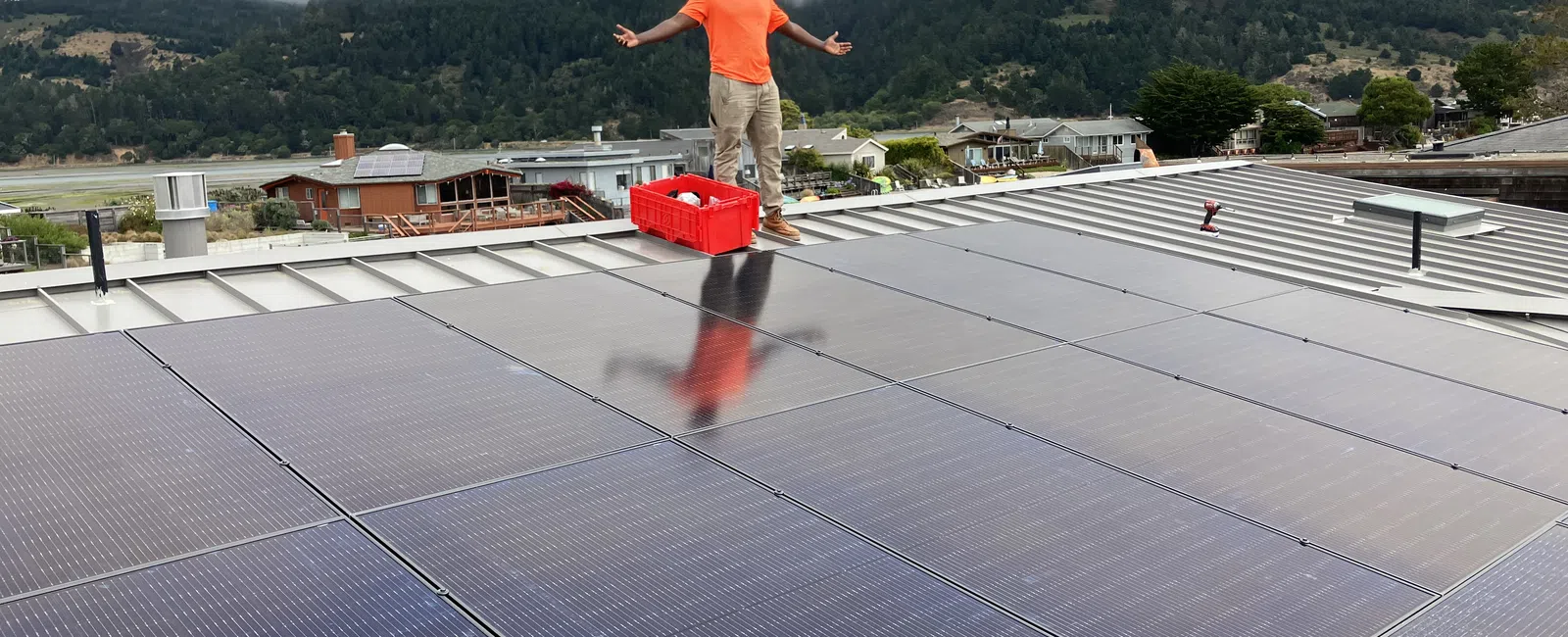
Efficiency is the number homeowners tend to fixate on when comparing solar panels, and it's easy to see why. One panel says 20 percent; another says 22 percent, and the higher one must be better. It's a real measurement, and it does mean something, but it matters far less to your results than most people assume. What determines how much power you get is the system as a whole, not the rating on a single panel.
What efficiency really measures
A panel's efficiency is the share of sunlight that hits it that is converted into electricity. A 21 percent panel converts 21 percent of the sunlight that lands on its surface into power.
That's it. Efficiency isn't a quality score, nor is it a measure of how long a panel lasts or how well it's built. It's about how much power a panel produces per unit of space. Most quality residential panels today land in a fairly narrow band, roughly the high teens to low twenties, so the gap between a good panel and a great one is usually a couple of percentage points, not a chasm.
Why a higher number isn't automatically the better buy
Here's the part that surprises people. Efficiency describes power per square foot, so it only really matters when square feet are what you're short on.
If your roof has plenty of room, a slightly less efficient panel gets you to the same production. You just use a bit more of the space you already have and weren't otherwise using. Paying a premium for a higher rating buys you nothing you'd notice, because the goal was never a big number on a spec sheet. It was covering your electricity use.
Think of it this way. If a system needs to produce a certain amount of power for your home, slightly less efficient panels might mean a couple of extra panels on a roof with space to spare. You end up in the same place. On a roof with no room to spare, those extra panels have nowhere to go, and that's when the higher rating starts to matter.
Efficiency earns its keep when space is tight. A small roof, a lot of vents and dormers breaking it up, or a household that uses a lot of power relative to its available roof, those are the cases where fitting more production into fewer panels genuinely helps. Then a higher-efficiency panel is worth considering.
What really decides how much power you get
Efficiency is one input among several, and it's rarely the one that moves the needle.
- Roof space and layout. How many panels fit and where they can go set the ceiling on your system long before the panel rating does.
- Shading. A tree or a chimney shadow costs you far more production than a two-point difference in efficiency ever will. Where the panels go matters more than which panels they are.
- Direction and tilt. The way your panels face affects how much they produce and when, which we cover in the "direction solar panels should face" section.
- System design. Sizing the array to your real usage, choosing the right inverter setup, and laying out the panels to work around your roof's quirks all shape your results.
- Install quality. A well-built system performs the way it was designed to, year after year. A sloppy one doesn't, whatever's printed on the panels.
Put those together, and you can see why two homes with identical panels can end up with very different production. The panel is one part of a system.
Panels keep getting better, and that's fine
Efficiency has climbed steadily over the years, and today's panels produce meaningfully more power per square foot than those of two decades ago. That's genuinely good news, and it's part of why solar works well on more homes than it used to.
It also means there will always be a slightly better panel next year. That's not a reason to wait. The system you install now starts producing and saving now, and a panel a point or two higher down the road wouldn't change your results much anyway. The right time to size a system is when you're ready to put it to work.
The number worth asking about instead
When you compare proposals, the useful question isn't "what's the efficiency rating?" It's "how much power will this system produce for my home, and what will it cost me?" That figure accounts for the panels, the design, your roof, and your shading all at once, which is what you're really buying.
It's also worth asking about durability and the warranties behind the equipment, since a panel that holds up for decades matters more than one that starts a hair higher and ages faster. Our post on how long solar panels last digs into that aspect.
How we approach it
We use quality panels from established manufacturers and pick the ones that fit your roof and goals, rather than chasing the highest number on a chart. If your roof is tight on space, higher-efficiency panels may well be the right call, and we'll say so. If you have room to work with, we'd rather put your money into a well-designed, well-built system than a spec sheet bragging right.
That's the advantage of designing each solar system around the specific home. We look at your roof, your shading, and your real usage, then build the system that gets you where you want to be.
We've been doing this across Marin, Sonoma, and Napa since 1984. We're 100% employee-owned, we've installed more than 9,000 systems, and we're licensed as a General Contractor (B) and Electrical Contractor (C-10). We were also among the first companies in California to earn the state's C-46 solar license, so you have a local team that can tell you which specs matter for your home and which are just noise.
Want a straight answer on what your roof can produce? Contact SolarCraft or call Sonoma/Napa 707.778.0568 or Marin 415.382.7717.