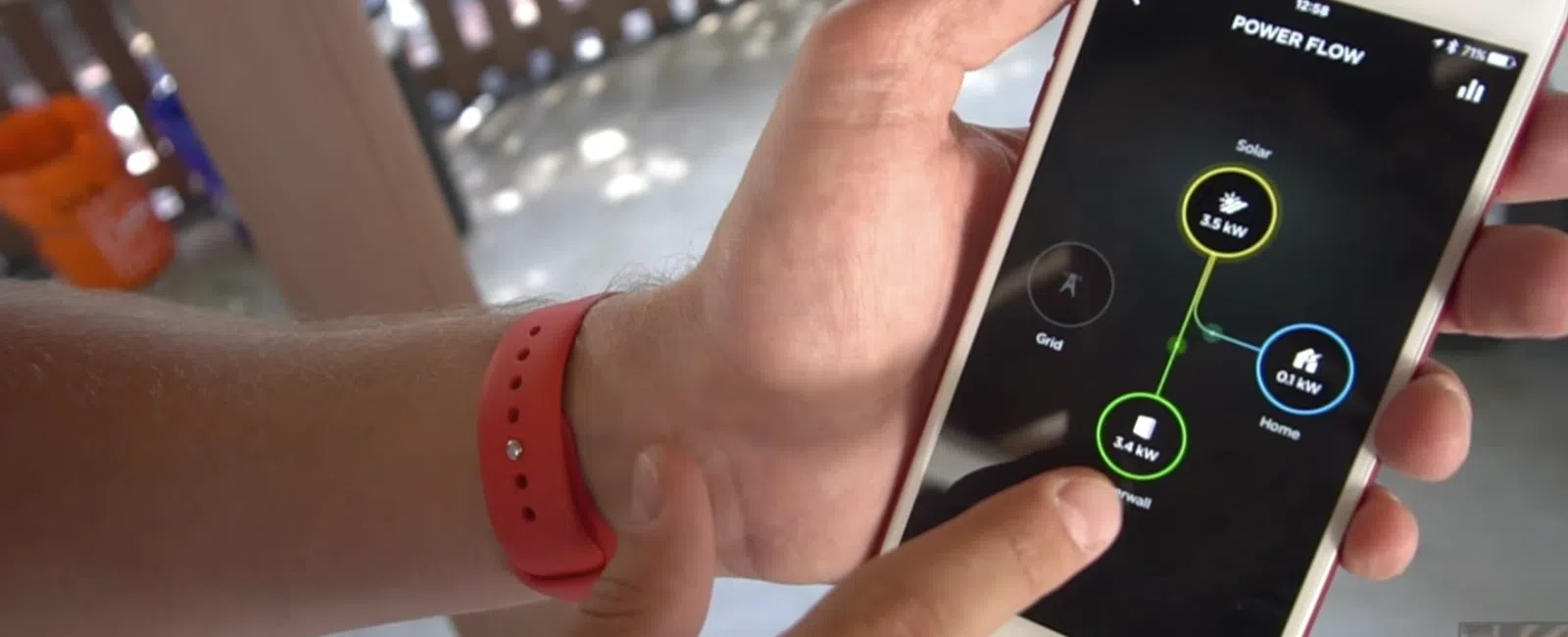
Your solar system comes with monitoring, usually through a phone app, that shows how much power your panels produce. It's one of the more rewarding parts of owning solar because you can actually see your system working and track its performance over time.
We recommend checking the app from time to time so you become familiar with what normal production looks like for your home. If something ever seems unusual or your production changes unexpectedly, you'll be able to spot it early and reach out for help.
What your monitoring app shows you
Most monitoring platforms show the same core things: how much power your system is producing right now, how much it produced today, and how that compares over weeks, months, and the year. Many also show how much your home is using, so you can see the relationship between the two.
If your system uses microinverters, you may also get panel-level data, meaning each panel reports separately. That's handy because it makes it easy to see whether a dip affects your whole array or just one spot.
None of it requires any technical knowledge. You're looking for the general shape, not analyzing numbers. If you've never opened your app, it's worth taking five minutes to poke around and get familiar with where the daily and monthly views live. That small bit of familiarity is what makes it easy to notice later if something looks unusual.
What's normal
Before you can spot a problem, it helps to know what healthy looks like, because solar production naturally moves around quite a bit.
Your output rises and falls with the sun through the day, peaking around midday. It also changes with the seasons, with summer well above winter, which is completely expected. Cloudy days produce less than clear ones. A rainy week in January will look nothing like a sunny week in July, and that's exactly how it should look.
So a lower number on its own isn't a red flag. The pattern is what matters.
What's worth a second look
Watch for a drop that the weather and season don't explain. If your production falls off noticeably and stays down while the sun is out and nothing else has changed, that's worth investigating.
A few examples: your system produces well below what it did on similar days last month or last year, one panel reads far lower than its neighbors, or your app shows nothing at all coming from the system. Any of those is a reason to take a closer look.
Before you call
If something looks off, a couple of quick checks often explain it. Has anything started shading your roof, like a tree that's grown or a new structure nearby? Has there been heavy dust buildup during a long dry stretch? Is your app simply having a connection issue, which is more common than an actual system problem?
If none of that explains it, reach out. Our post on solar panels not producing power walks through the common causes, and our service and maintenance team can take it from there.
Seeing your savings, not just your production
Monitoring offers more than catching problems, and it's the part homeowners tend to enjoy most. Watching your production is watching your investment pay you back. On a good summer day, seeing your system cover your home's usage and then some is genuinely satisfying, and it reminds you why you went solar in the first place.
If you have a battery, your app usually shows that too: how much stored solar you used in the evening, how full the battery is, and how it performed during an outage. Together, it gives you a clear picture of how much of your home's energy you're supplying yourself.
Building the habit
You don't need to check daily. A glance every few weeks is plenty, plus a look after any big weather event or if your electricity bill surprises you. Some homeowners like checking monthly; others prefer a quick seasonal review. Either works.
The reason it matters is simple: your system is designed to produce for decades, and catching an issue early means it gets resolved quickly instead of quietly costing you production for months. A few seconds in an app protects a long-term investment.
We're here when you need us
Monitoring is yours, but support is ours. When something looks wrong, we're here to diagnose and fix it, and our in-house team services the systems we install as well as systems installed by other companies. We'll also walk you through your monitoring platform when your system goes live, so you know what you're looking at from day one.
We've designed, installed, and supported solar systems across Marin, Sonoma, and Napa since 1984. We're 100% employee-owned; we've installed more than 9,000 systems, and we're licensed as a General Contractor (B) and Electrical Contractor (C-10). We were also one of the first companies in California to earn the state's C-46 solar license, so the team that built your system is the same one looking after it.
Questions about your production or your monitoring? Contact SolarCraft or call Sonoma/Napa 707.778.0568 or Marin 415.382.7717.