Accessory dwelling units are everywhere in the North Bay right now, and for good reason. They add space, income, and flexibility to a property. If you're planning one, add this to your list early: solar. In California, building a new detached ADU can trigger a solar requirement, and even when it doesn't, an ADU is a natural moment to think about your property's energy.
The key is to plan for it at the start, not after the plans are drawn.
California's solar rule and your ADU
California's solar requirement comes from the statewide building energy code known as Title 24, so it works the same way across Marin, Sonoma, and Napa. In general, it requires new residential construction to include solar, and whether your ADU falls under it depends on the kind of ADU you're building.
As a rule of thumb, a brand-new detached ADU is treated as new construction and generally does need solar. An attached ADU usually doesn't, because it's considered an addition to your existing home rather than a new building. And projects that rework space you already have, like a garage conversion, a junior ADU, or converting an existing structure, generally don't trigger the requirement at all.
Those are general patterns, not guarantees. Because the rules hinge on how your project is classified and permitted, the most important step is to confirm the details with your local building department. What holds in one city or unincorporated area may be handled a little differently in the next, so it's always worth a quick check before you assume anything.
Even when solar is required, it's not one-size-fits-all
This is where people tend to get the wrong idea, so it's worth clearing up. Even when a detached ADU does need solar, that doesn't mean a set number of panels bolted onto the ADU's roof.
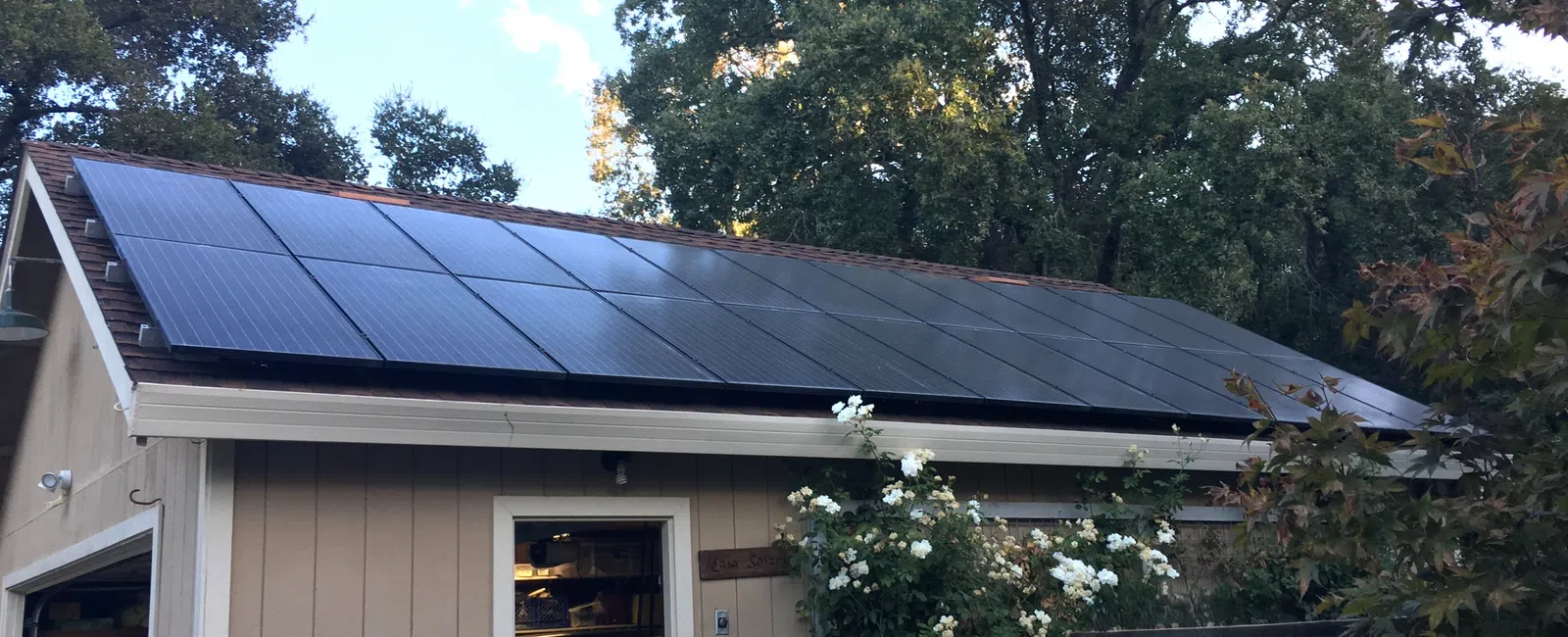
First, the required system is sized to your specific project, so there's no standard panel count that applies to every ADU. Smaller projects can even fall below the threshold where solar isn't required at all. The panels don't necessarily have to sit on the ADU either. The required solar can often go on the main house or somewhere else on the property, wherever it makes the most sense. And if your home already has solar, you may be able to expand that system to cover the ADU, though the existing panels generally don't count toward the new requirement, so it usually comes down to adding capacity.
The takeaway is simple: the right approach depends entirely on your property, which is exactly why it helps to look at it early with a company that designs solar every day.
What about a guest house?
Guest houses are less clear-cut than ADUs. A new detached dwelling or guest house may fall under the new-construction solar requirement depending on how it's classified and permitted, while converting an existing guest house generally does not. As with ADUs, classification drives everything, so confirm with your local building department before you assume either way.
Why to plan solar early
If there's one message to take from all of this, it's to bring solar into the conversation at the design and permitting stage, not after the plans are finished. Sorting out how the requirement applies to your project, and where the panels should go, is far simpler while things are still on paper.
Planning early also opens up better options. Coordinating solar with your ADU design means the roof, the electrical, and the panel placement can all be set up properly from the start. It's far easier to leave a clear, well-oriented spot for panels on the drawings than to work around vents and equipment after the fact. We cover why that matters for any new build in our post on building a new home with solar, and the same logic applies to an ADU.
Think beyond the minimum
This is the opportunity a lot of homeowners miss. Meeting code is the floor, not the goal. When you're already adding solar to a property, it's the perfect moment to think about your whole energy picture rather than installing only the minimum the rule requires.
An ADU usually means more people, more square footage, and more electricity use on the property, which often makes a larger solar system worth considering. It's also a natural time to consider battery storage, so your property can use its own solar in the evening and keep power during an outage for both the main home and the new unit. Designing for how you'll really use the property tends to pay off far more than just checking a box.
We help you get it right from the start
We figure out how the solar requirement applies to your ADU and design a system that does more than the minimum. We've been designing and installing solar across Marin, Sonoma, and Napa since 1984, so we know the local jurisdictions and how these projects come together.
We're 100% employee-owned; we've installed more than 9,000 systems, and we're licensed as a General Contractor (B) and Electrical Contractor (C-10). We were also one of the first companies in California to earn the state's C-46 solar license. We're glad to work with you, your builder, and your architect early in the process, so solar fits your ADU cleanly rather than becoming a scramble at the end.
Planning an ADU? Contact SolarCraft or call Sonoma/Napa 707.778.0568 or Marin 415.382.7717.