Solar is a long-term investment in your home, so the company you choose matters as much as the panels themselves.
The good news is that a few well-chosen questions will tell you almost everything you need to know about who you're dealing with.
Is the company properly licensed?
Start here, because it's the foundation. In California, a company installing solar should hold the right contractor's license: a C-46 solar license, a C-10 electrical license, or a B general contractor license. Ask for the license number and check it at the state's Contractors State License Board.
A properly licensed contractor has met the state's standards and is accountable to them. If a company is vague about its license, that tells you something. SolarCraft holds General Contractor (B) and Electrical Contractor (C-10) licenses, and we were one of the first companies in California to earn the state's C-46 solar license.
Is the person selling to me a registered salesperson?
This one catches a lot of homeowners by surprise, and it's important. In California, a solar salesperson who meets with you in your home generally must be registered with the state as a Home Improvement Salesperson, or HIS. It's a registration through the Contractors State License Board that allows someone to sell home-improvement work on behalf of a licensed contractor.
It's not the same as a contractor's license, but it matters because it means the person across your kitchen table is accountable to the state for how they sell. In fact, California's own solar consumer guidance tells homeowners to ask a salesperson for their HIS registration number and verify it. A reputable company makes sure its consultants are properly registered.
Every SolarCraft consultant who meets with you at home carries their HIS registration, and you're welcome to verify it.
Do you use in-house crews or subcontractors?
This one shapes the quality of your entire installation. Some companies, especially large national ones, sell you a system and then hand the actual work to whichever subcontractor is available. Others install with their own trained, licensed employees.
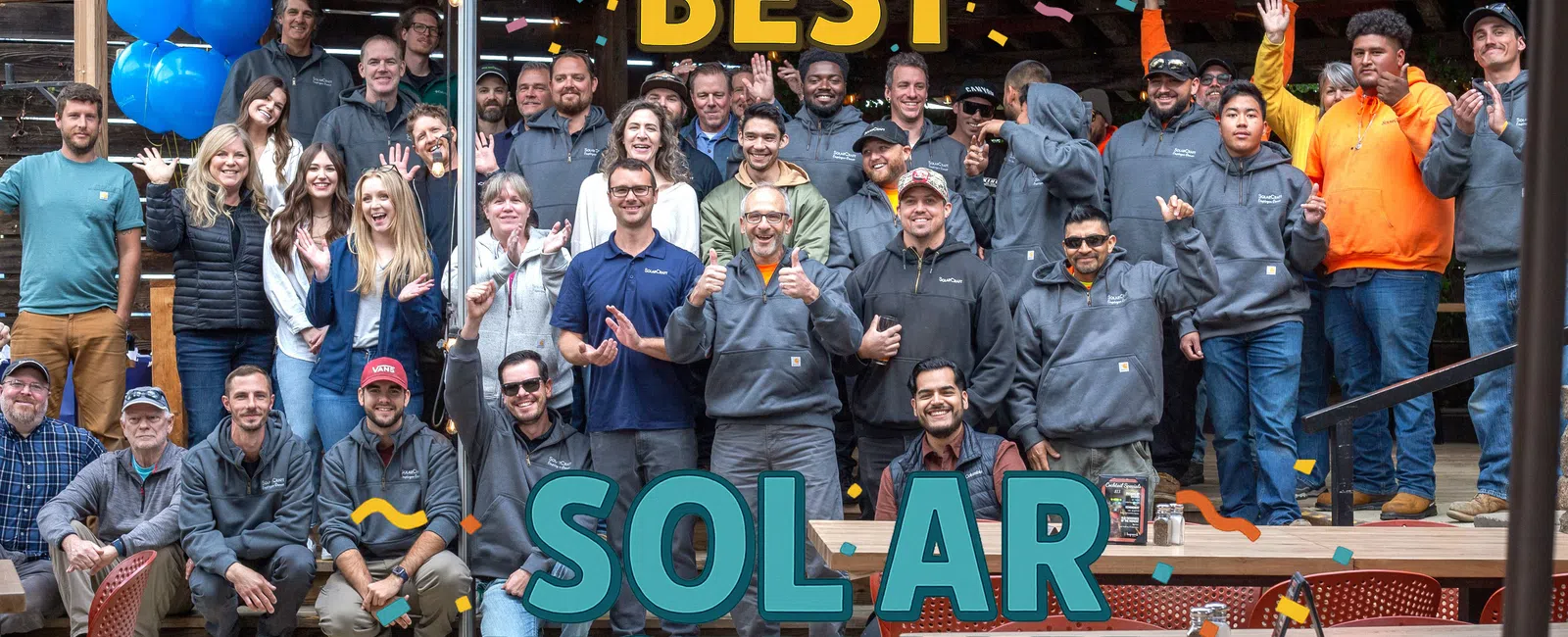
The difference shows up in accountability. When one company designs, installs, and stands behind the work, there's no finger-pointing if a question comes up later. We install every system with our own licensed, in-house crews, never subcontractors, so the same company is responsible from the first site visit to the last service call.
How long have you been in business locally?
Solar comes with long warranties, some lasting 25 years, and a warranty is only as good as the company still around to honor it. Many solar systems in California were sold by companies that have since closed, leaving customers with paperwork and no one to call.
Ask how long a company has operated, and whether it's truly local. A long, local track record is one of the best signs that a company will be there for the life of your system. We've been based in the North Bay since 1984 and have installed more than 9,000 systems across Marin, Sonoma, and Napa.
What do the warranties cover, and who honors them?
Not all warranties are equal, so dig into the details. Ask how long the equipment (product) warranty lasts, how long the workmanship warranty from the installer lasts, and who is responsible for each. Ask whether the workmanship warranty is backed by the company doing the installation, and whether coverage transfers if you sell your home.
We break this down in depth in our post on solar panel warranties, but the short version is that a solid warranty from a stable local company is worth far more than a longer one on paper from a company that may not last.
How do you size the system?
A good installer designs to your home, not to a template. Ask whether they'll review your actual electricity usage before recommending a system size. A company that quotes you a system without looking at how much power you really use is guessing, and a system that's too big or too small costs you either way.
We start every design by reviewing your real usage and goals, then size a solar system to fit. It's the only way to know a system will do what you're paying for.
Do you handle the permits and utility paperwork?
Going solar involves permits from your local agency and approval from PG&E. Ask whether the company manages all of that for you, or leaves it on your plate. A capable installer handles the design, engineering, permitting, and utility coordination as part of the job, so you're not chasing paperwork.
A few more worth asking
Rounding out your list: Can they provide local references or reviews from customers near you? What financing options do they offer? Will they walk you through your monitoring and how to keep an eye on production? And do they offer service and maintenance after the install, including on systems other companies put in?
Taken together, the answers paint a clear picture. For a deeper look at the pitfalls to sidestep, our post on the top mistakes homeowners make going solar is a good companion to this checklist.
The easiest question of all
If you'd rather just talk it through, we're happy to answer every one of these ourselves, plainly and without pressure. Asking good questions is how you end up with a system, and a company, you feel good about for decades.
We're 100% employee-owned, licensed, local since 1984, and proud to stand behind our work. Have questions for us? Contact SolarCraft or call Sonoma/Napa 707.778.0568 or Marin 415.382.7717.