On most PG&E residential rate plans, peak hours run from 4 to 9 p.m. every day. During that window, electricity costs the most, so the same appliance costs more to run at 6 p.m. than it does at noon or midnight.
Knowing when your peak window falls, and what tends to run during it, is one of the simplest ways to bring your electricity bill down.
Peak hours on PG&E's most common plans
PG&E offers several residential time-of-use plans, and the peak window depends on which one you're on.
- E-TOU-C is the plan most households are on. Peak runs from 4 to 9 p.m. every day, including weekends and holidays.
- E-TOU-D has a shorter window, 5 to 8 p.m., and applies only on weekdays. Weekends and holidays are off-peak all day.
- E-ELEC is designed for homes that run largely on electricity. Peak is 4 to 9 p.m. every day, with a partial-peak hour from 3 to 4 p.m.
PG&E also offers an EV rate plan with its own schedule, designed to reward overnight charging. Your current plan is listed on your electricity statement and in your PG&E online account. If you're not sure which plan best fits your household, PG&E's rate comparison tool runs the numbers against your actual usage.
Prices also shift with the seasons. Summer runs June through September and carries the highest rates of the year. Winter runs October through May, with lower rates but the same daily peak window.
Why power costs more during peak hours
The peak window lines up with when California's grid is under the most strain. In the late afternoon, solar production across the state starts to fall off while household demand climbs as people get home, cook, run laundry, and turn on the air conditioning. Utilities need more expensive power sources to cover that gap, and time-of-use pricing passes that cost along.
It also means the timing of your electricity use matters as much as the amount. Two homes can use the same total power in a month and still see very different bills, depending on how much of that use falls between 4 and 9 p.m.
What usually runs during the peak
For most households, the peak window is the busiest part of the day. The usual heavy hitters:
- Cooking, especially an electric range or oven.
- Laundry and dishwashing, often started after work.
- Air conditioning on hot afternoons and evenings.
- EV charging, if the car gets plugged in as soon as it's home.
- Pool pumps set to run in the late afternoon.
Our post on what uses the most electricity in your home goes deeper on each of these.
Simple ways to shift your usage
Moving even part of your usage out of the peak window helps:
- Run the dishwasher and laundry before 4 p.m. or after 9 p.m. Most machines have a delay-start setting.
- Set your EV to charge overnight instead of as soon as you get home.
- Schedule the pool pump for midday.
- On hot days, cool the house down in the early afternoon so the air conditioner works less once the peak begins.
These habits help on any plan. The limit is that some loads, like cooking dinner or keeping the house comfortable, have to happen in the evening no matter what.
How a home battery covers the peak
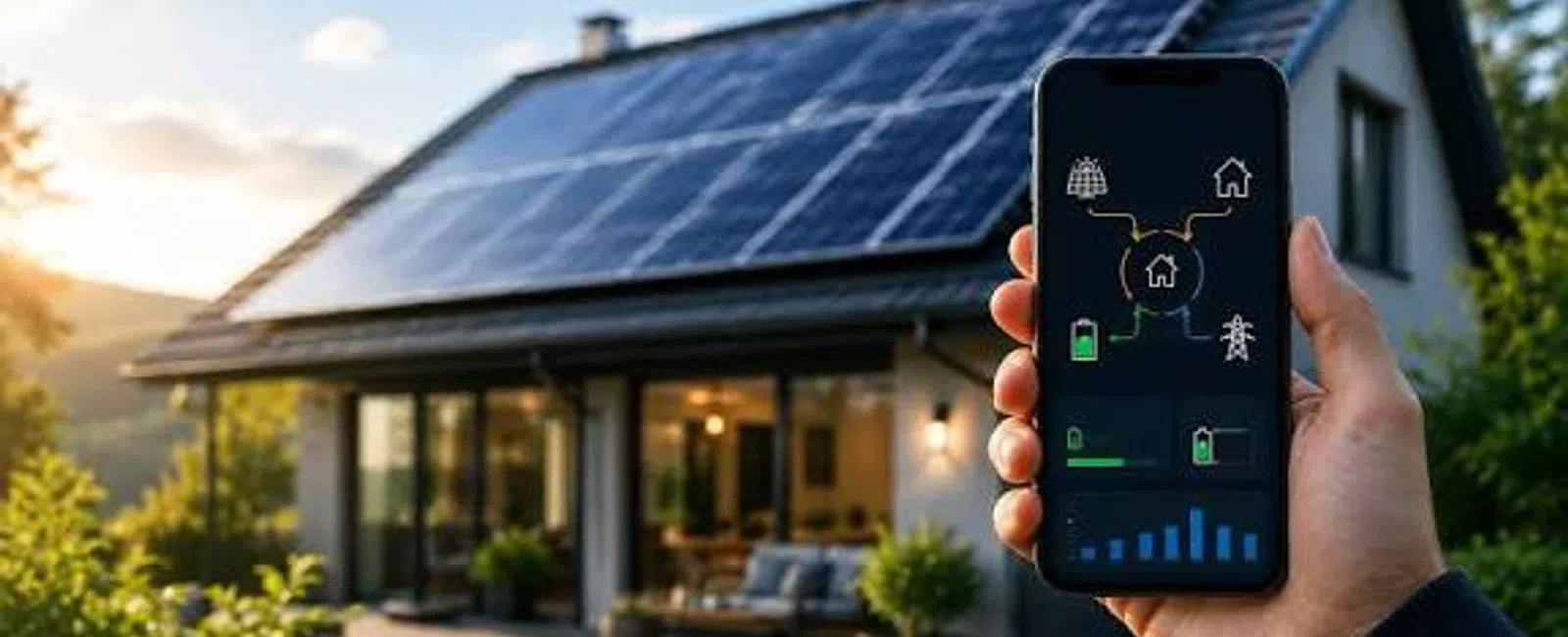
This is where a battery makes the biggest difference. Solar panels produce most of their power in the middle of the day, and their output fades just as the peak window begins. A battery stores your daytime surplus and releases it in the evening, so your home runs on its own stored solar from 4 to 9 p.m. instead of buying power at the highest rate.
Instead of rearranging your evening around the rate schedule, you can cook dinner, run the dishwasher, and keep the house comfortable on power you already made. Many battery systems also let you schedule when the battery discharges, so you can point it at your specific peak window.
There are two ways to set one up. A Savings Battery stores and releases power every day to cut your peak-hour costs, but it doesn't power your home during an outage. A Backup Battery does the same daily job and also keeps your home running when the grid goes down. Both cover the peak. Our post on how battery storage powers your evenings and outages explains how they work.
If you already have solar, you can usually add a battery to your existing system. Our post on adding a battery to your existing solar walks through what that involves.
Your rate plan and your battery settings
The best battery settings depend partly on your rate plan, since the peak window and export rates differ between plans. Some homeowners on the Net Billing Tariff may also be able to send stored power back to the grid at certain times of year for additional credit. We'll review your plan when we design your system and show you how to set the battery to match. Our post on home battery settings covers the backup reserve setting in more detail.
Make the peak work for you
Rates have climbed steadily across the North Bay, and the peak window shows those increases most. Shift what you can and cover the rest with stored solar to keep more of your evening use off the grid.
We design battery storage around each home's usage and rate plan, and we've been doing it across Marin, Sonoma, and Napa since 1984. We're 100% employee-owned, licensed as a General Contractor (B) and Electrical Contractor (C-10), and one of the first companies in California to obtain the state's C-46 solar license.
Want to see what a battery could do during your peak hours? Contact SolarCraft or call Sonoma/Napa 707.778.0568 or Marin 415.382.7717.