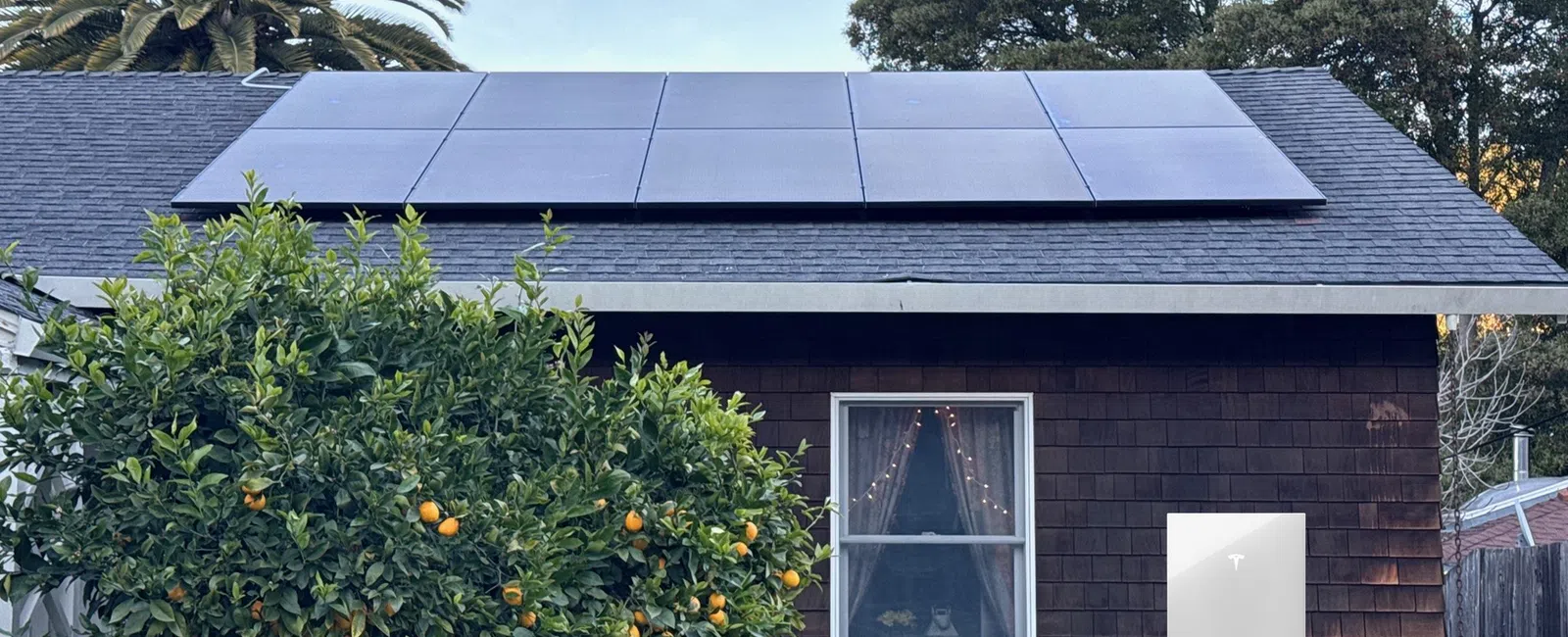
Your solar panels generate the most power at midday, which is usually when no one is home to use it. By the time everyone is back in the evening, the sun is setting, and the panels are slowing with it. That gap is what a home battery is for.
A battery stores the excess electricity your panels generate during the day, so you can use it at night instead of buying it back from PG&E. Add one to your solar system and your home keeps running on its own power after dark, and it keeps running when the grid goes out.
SolarCraft has been designing and installing solar and battery systems across Marin, Sonoma, and Napa since 1984, and home batteries are now a big part of the work.
Using your solar at night
Here is the simple version. During the day, your panels power your home first. Anything left over charges the battery. After the sun sets, your home runs on battery power instead of drawing from the grid.
That matters because electricity is most expensive in the evening. PG&E charges its highest rates in the hours after people get home, start cooking, and turn everything on. A battery lets you cover those expensive hours with power you already made, so you are buying less from the grid exactly when it is priciest.
The more electricity you use at night, the more a battery helps. If you charge an electric car in the driveway or run a home office, much of that load falls in the evening, which is when a battery is built for. And because PG&E rates keep climbing, the power you pull from your own battery is worth a little more every year.
That is also why it pays to think about solar and a battery together rather than one at a time. Solar lowers your bill during the day. A battery carries those savings into the evening. When the two are designed as one system from the start, your panels, battery, and electrical panel work together, and you get more out of every bit of power your roof generates.
Keeping the lights on during an outage
When the power goes out, a normal solar system shuts off, too. That catches a lot of people off guard. Panels must be switched off during an outage so they do not feed electricity onto lines where crews may be working. So solar by itself does not keep your home running when the grid is down.
A battery changes that. The moment the grid drops, the battery takes over and keeps your backed-up circuits going: your refrigerator, your lights, your internet, the outlets you rely on. You do not have to flip a switch or drag out a generator. It happens on its own, and it hands control back when the power returns.
Here is the part North Bay homeowners tend to like most. The battery recharges from your panels the next morning. So if an outage stretches into a second or third day, you are not stuck waiting for a single charge to run out. The sun recharges the battery each day.
How long the battery can run depends on its size and what you ask it to power. Keeping a few essentials on is very different from running the whole house, so the right setup depends on your home and what matters to you. SolarCraft sizes each battery around the circuits you most want to keep on.
Which battery is right for your home: Enphase, Tesla, and Franklin
SolarCraft installs three of the most trusted home batteries on the market: Enphase, Tesla Powerwall, and Franklin. All three are good. They mainly differ in how much they store, how much they can run at once, and how they pair with your panels.
The right one for you comes down to your home: how your electrical setup is wired, how much power you use, and what you want the battery to do. If riding out long outages is the priority, that points one way. If you are mostly trying to skip the expensive evening rates, that might point to another option. SolarCraft's energy consultants walk you through that and match the battery to your home, rather than pushing one product on everyone.
Adding a battery to a new or existing solar system
It does not matter if you are new to solar or already have panels on your roof. You can add a battery either way.
If you are starting from scratch, SolarCraft designs the solar and the battery together, so everything is sized to fit from day one. If you already have solar, the team can add a battery to your system so your daytime panels now cover your evenings and keep you running during outages, too.
Either way, the same local crew handles it from start to finish: the design, permits, utility paperwork, and installation. SolarCraft does not hand the job to a subcontractor, and the same company is there to service the system years later.
Why the installer matters as much as the battery
A battery becomes a permanent part of your home's electrical system, so who installs it matters as much as which one you pick.
SolarCraft is 100% employee-owned, has worked across the North Bay since 1984, and has installed more than 9,000 systems. The company is a licensed General Contractor (B) and Electrical Contractor (C-10), and it was the first in California to earn the state's C-46 solar license. In plain terms, the people wiring your battery are qualified to do the electrical work right, and the company has been around long enough that it will still be here if you ever need it.
Want to know what a battery would do for your home? Contact SolarCraft or call Sonoma/Napa 707.778.0568 or Marin 415.382.7717.