Going solar is more like a small home improvement project than a quick purchase. There's design, permitting, and a utility approval involved, each on its own schedule.
Once you know how it all flows, the whole thing is easy to follow, and we handle nearly all of it for you.
Two timelines, not one
It helps to separate two things right up front.
- The physical installation, the part where our crew is on your roof, is quick. For most homes, it takes about one to three days.
- The full process, from the day you sign to the day your system switches on, takes longer. In between sit design and engineering, permits from your local agency, your own approvals along the way, an inspection, and final sign-off from PG&E. A few of those steps are in other people's hands, like the permit office and the utility, so no one can promise an exact date. None of it asks much of you, and it's well worth the wait for a system that will run on your roof for decades.
1. Consultation and site visit
It starts with a conversation about your home and your energy use. We look at your roof, your electrical panel, and how your home uses power, and we pull your PG&E usage history to size the system to what you really use.
There's more to the site visit than it looks. We check your roof's orientation, pitch, and any shading through the day, the condition and capacity of your main electrical panel, and what it takes to mount the array safely. All of that shapes the design, and sometimes it tells us whether a panel upgrade or a little prep work makes sense before we install. From there, we design a solar system built for your home: how many panels, where they go, and whether a battery fits your goals.
2. Your proposal
Next, you get a proposal that lays out the system design, what it will produce, and your options for paying, whether you buy it outright, finance it, or go with a power purchase agreement. Each one works a little differently in terms of cost and ownership, and we'll walk you through them. Reviewing and approving that proposal is the first of several points where your input steers the project.
3. Engineering and permitting
Once you approve, we move into final engineering and a full plan set. That covers both the structural and the electrical detail: how the array is anchored, how it's wired, and how it ties into your panel. Then it goes to your city or county building department, which reviews it against code before issuing the permit.
This is one of the spots where waiting is normal. Permit timelines are set by each local agency and vary across Marin, Sonoma, and Napa. We prepare and submit everything and handle the back-and-forth, so the paperwork is on us, not you.
4. Installation
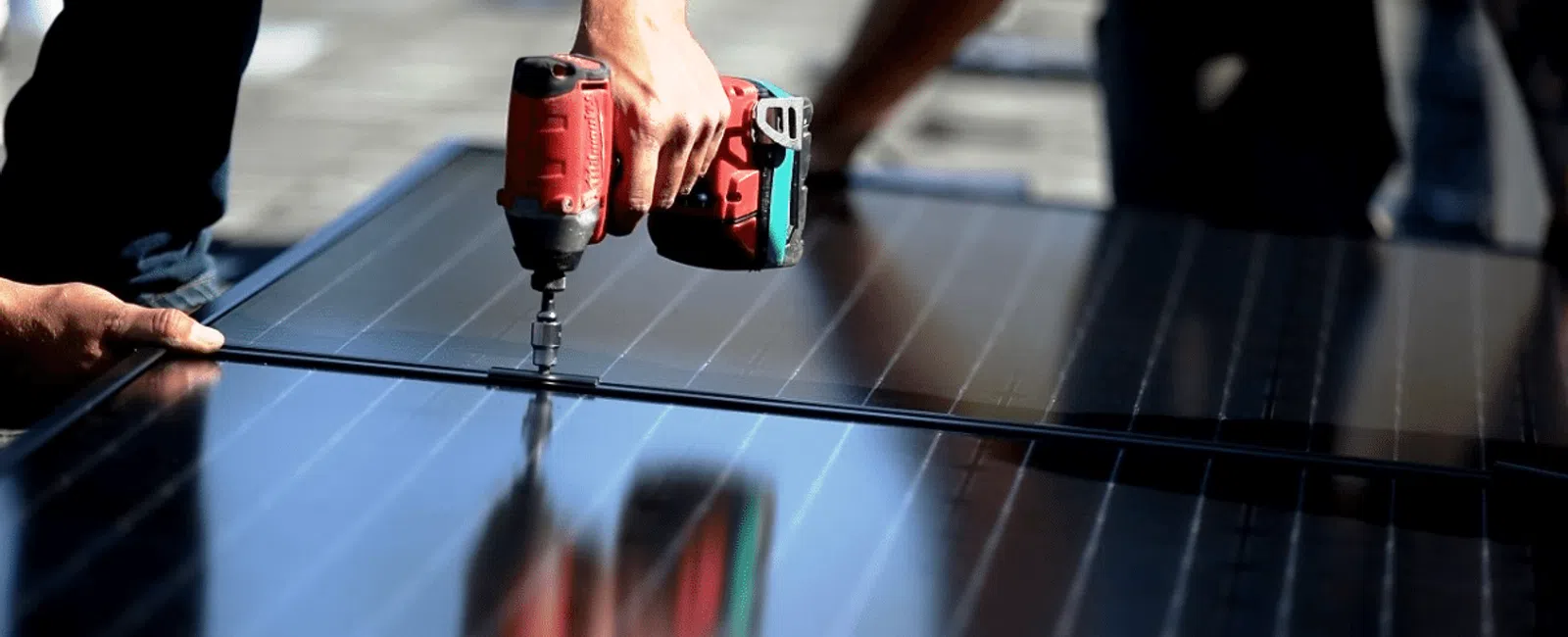
Then our crew comes out. For most homes, the installation takes about 1 to 3 days, depending on the size of the system and the details of your roof and electrical setup. Larger or more complex systems take a little longer. We install with our own licensed, certified employees, never subcontractors. Over those days, the team sets the racking, mounts the panels, installs the inverter and any battery, and ties it all into your electrical panel. When we're done, your system is built, but there's one more step before it can turn on.
5. Inspection and utility approval
Your local building department inspects the finished work to make sure it meets code. Once it passes, the project goes to PG&E for a Permission to Operate (PTO), the utility's official go-ahead to switch on and connect to the grid. Your system can't legally turn on until PTO comes through, and that review happens on PG&E's schedule. This step also sets up the billing arrangement for the power your system sends and pulls, and confirms the right meter for a solar home. It's the last stretch, and the green light everything is working toward.
6. Switch-on
With PTO in hand, your system goes live. The panels start producing, your monitoring comes online, and your home starts running on its own solar. You can help things move by getting back to us quickly when we need a signature or a decision, and by having your recent PG&E bills handy early on. The steps handled by the permit office and the utility proceed on their own schedules, but the ones within your control keep everything rolling toward switch-on.
Why it's worth the wait
Every step between signing and switch-on is there for a reason. Engineering ensures your system is built right, permitting ensures it's safe and up to code, and utility approval ensures it connects to the grid properly. Those checks are what stand behind a system that will produce for 25 years or more. Seen that way, the waiting isn't wasted time so much as the steps that make a permanent electrical system solid, and once you know what each stage is for, the process feels a lot less like a mystery.
We've guided North Bay homeowners through this since 1984. We're 100% employee-owned, have completed more than 9,000 installations, and are licensed as a General Contractor (B) and Electrical Contractor (C-10), and hold one of the first C-46 solar licenses issued in California. And we keep you posted at every step, so you always know where your project stands.
Ready to see what going solar looks like for your home? Contact SolarCraft or call Sonoma/Napa 707.778.0568 or Marin 415.382.7717.