If you already have solar panels, adding a battery is usually straightforward. Your panels keep doing what they do now, and the battery stores the extra power they make during the day so your home can use it later. Most of the work comes down to matching the right battery to your existing equipment.
There are two ways to set one up:
- A Savings Battery stores and releases electricity every day to lower your electricity bills, but it isn't set up to power your home during an outage.
- A Backup Battery does everything a Savings Battery does and also keeps your home running when the grid goes down. We install both, and the right choice depends on whether outage protection matters to you or you're focused on savings alone.
What a battery adds to the system you have
Without storage, your panels only help while the sun is up. Any power your panels make beyond what your home uses goes to the grid, and in the evening your home buys electricity back from PG&E during the hours when rates are highest.
A battery changes that pattern. It stores your daytime surplus and releases it after sunset, so you use more of the power your roof makes at home. That shifts your evening use away from the grid, which is where a battery does most of its everyday work.
A Backup Battery adds something your solar can't do alone. For safety, a standard solar system shuts off during a grid outage, even on a sunny day. With a Backup Battery, your home keeps running on stored power, and your panels can recharge the battery while the grid is down. A Savings Battery skips the backup setup and focuses on the daily savings, which can make sense if outages rarely affect you. Our post on how non-backup batteries save on electric bills explains that option. Our post on how battery storage powers your evenings and outages covers both jobs in more detail.
What we check first
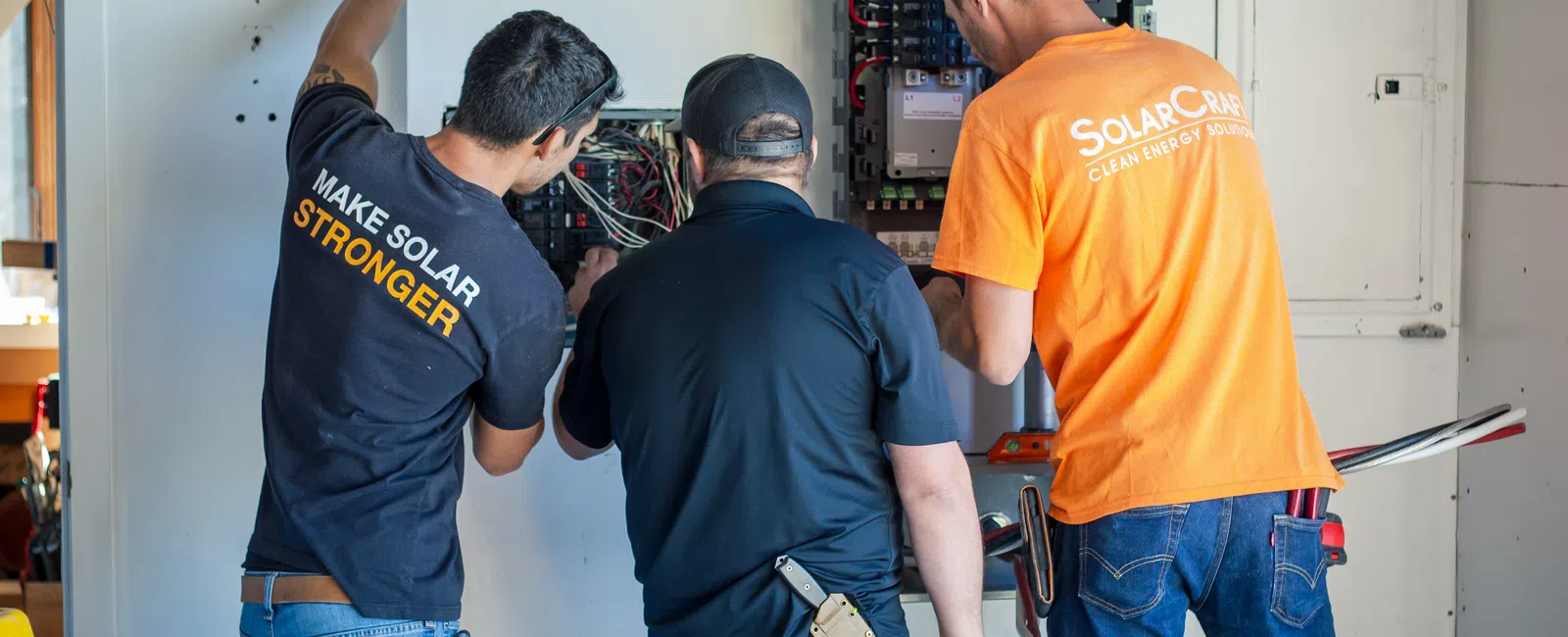
Every existing system is a little different, so we start by looking at what's already on your roof and in your garage.
- Your inverter. The inverter converts your panels' power into electricity your home can use, and it affects how a battery connects. Systems with microinverters and systems with a central inverter connect batteries differently. Some batteries pair more naturally with one setup than the other, so we usually confirm this first.
- Your electrical panel. We check the panel's capacity and available space. Many homes have room for a battery as-is. If yours doesn't, we'll tell you during the site visit and include any panel work in your proposal.
- Your usage and goals. This is where we decide between a Savings Battery and a Backup Battery. A battery for evening savings is sized differently than one meant to carry your home through a long outage. We review your PG&E usage history and ask what you want the battery to do most.
- Where it goes. Batteries mount on a wall or floor, usually in a garage or along an exterior wall. We'll find a spot that meets code and works for your home.
If your system is older
Systems that have been running for many years can still take a battery, but age changes the conversation. Inverters work hard and usually don't last as long as panels, so if yours is near the end of its life, replacing it at the same time can make sense. Some newer inverters can manage both solar and storage, which can simplify the setup. Older panels often keep producing well for decades, so they usually stay put. We'll tell you which parts of your system are in good shape and whether anything is worth updating while we're there, so you don't have to reopen the project a year or two later.
Choosing the right battery
We most often recommend Tesla Powerwall or Enphase for existing systems, depending on what you already have. Enphase batteries work naturally with Enphase microinverters, keeping everything on one platform and one app. The Powerwall is a high-capacity unit that pairs well with many other setups. Our Powerwall vs. Enphase comparison goes through the differences.
How much storage you need depends on what you want to back up and for how long. Covering a few key circuits takes less capacity than running most of the house. We cover that decision in how many solar batteries you need.
Your rate plan may change too
Adding a battery can affect how your system works with PG&E, and in some cases it means updating your interconnection agreement or reviewing your rate plan. The details depend on when you installed your solar and which plan you're on. We handle the utility paperwork as part of the project and will explain any changes to your account before you commit.
Systems we didn't install
You don't need to have bought your original system from us. We regularly work on solar installed by other companies, including systems whose original installer has since closed. We'll review the existing equipment, confirm what's compatible, and design the battery to fit.
How the project works
The process follows the same steps as any new installation. We visit your home, review your equipment and usage, and prepare a proposal. Once you approve it, we handle the permits and the PG&E paperwork. Installing a battery typically takes less time on site than a full solar installation, though the overall timeline still depends on permitting and utility approval, which run on their own schedules. Our post on what to expect when you go solar walks through each step.
If you choose a Backup Battery, it's worth a quick look at your backup reserve setting once it's live, which controls how much charge is held aside for outages. Our post on home battery settings explains how to set it.
Getting started
If your solar has been running without storage, a battery lets you use more of the power your roof already produces and gives your home backup when the grid goes down. We'll look at your current system and tell you plainly what it would take.
We've designed and installed solar and battery storage across Marin, Sonoma, and Napa since 1984. We're 100% employee-owned, licensed as a General Contractor (B) and Electrical Contractor (C-10), and one of the first companies in California to obtain the state's C-46 solar license.
Ready to add storage to your system? Contact SolarCraft or call Sonoma/Napa 707.778.0568 or Marin 415.382.7717.