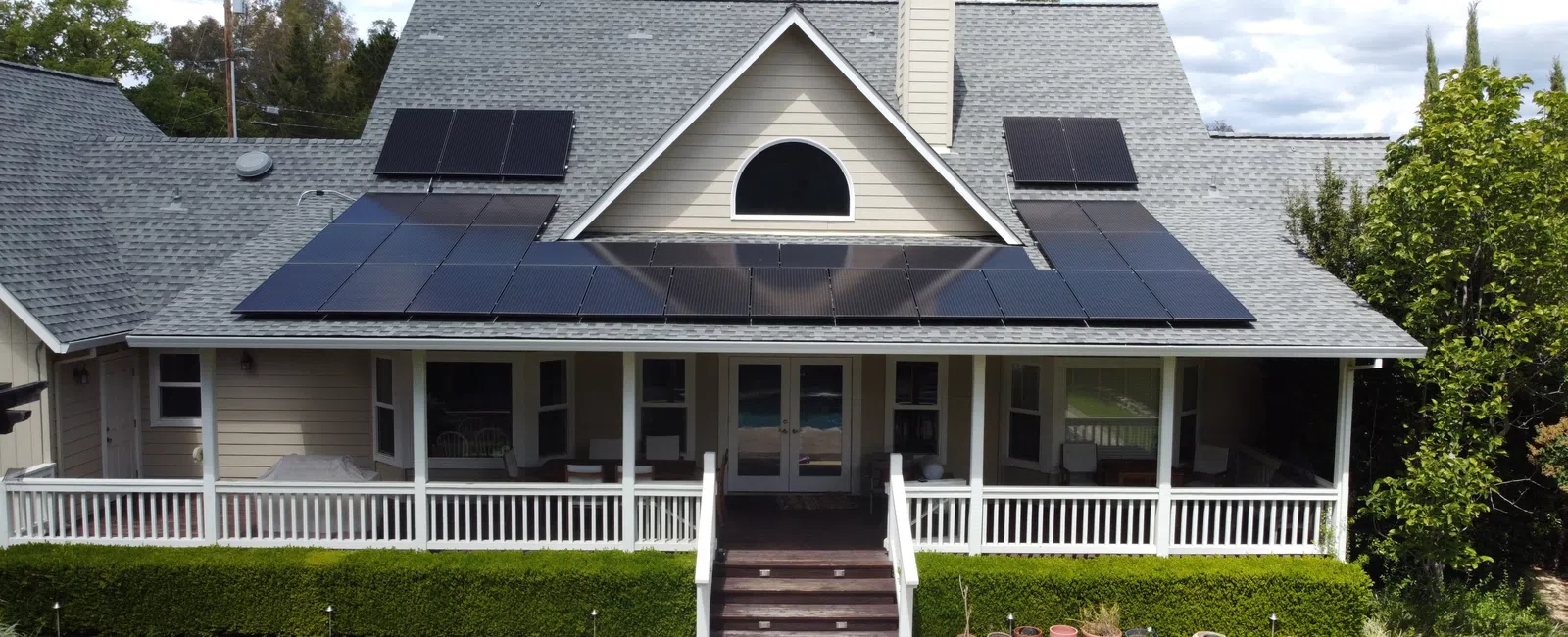
Summer is when your system works best. The days are long, the sun sits high, and your panels spend hours producing at full tilt. It's also when your home tends to use the most power, with air conditioning running and more people home.
That combination makes the warm months the best time of year to get real value from your solar and battery, and a few small habits can help you make the most of it.
Why summer is your system's strongest season
The reason is simply daylight. Long days and a high sun angle mean more hours of strong production than any other time of year. Your panels may well make more power on a July afternoon than your home can use at that moment, which is exactly what you want.
One quirk worth knowing: solar panels are a bit more efficient in cool temperatures than in hot ones, so a blazing heat wave isn't peak efficiency in a technical sense. It doesn't matter much, though, because the sheer number of daylight hours in summer more than makes up for it. Your system still produces far more in July than in January, which is the opposite of the picture we describe in our post on whether solar panels work in winter.
Use your power while you're making it
The single easiest habit in peak season is shifting your bigger electricity uses into the middle of the day.
Running the dishwasher, doing laundry, and charging an electric vehicle during daylight means those loads are covered by power your own roof is making right then, rather than power you buy. Pool pumps are a good one too, since they often run for hours anyway and can usually be scheduled for the sunniest part of the day.
Precooling is another trick worth trying. Letting your home cool down in the early afternoon, while your panels are producing strongly, means your cooling has less work to do during the expensive evening hours. You end up more comfortable and rely less on the grid.
Let your battery carry the evening
This is where solar and a battery really work as a pair. Your panels do their heavy lifting midday, and your battery holds the surplus for the hours after the sun drops, which is exactly when electricity costs the most, and your household is using plenty of it.
In summer, your battery is in an ideal position. The long days mean it refills each morning easily, so it can go into most evenings full and do its job without you thinking about it. Because it recharges reliably day after day, some homeowners run a lower backup reserve during these months and use more of their stored power for everyday needs. Our post on home battery settings and backup reserve walks through that tradeoff if you want to revisit your setup for the season.
Plan to raise your backup buffer for winter
The flip side is worth putting on your calendar now. When summer winds down, many homeowners raise their backup reserve for the winter months. Shorter days mean less sunlight to refill the battery each morning, and winter is when California's storms and power outages tend to arrive, so holding more charge in reserve gives you a bigger cushion when you need it most. Bumping your reserve up in the fall and back down in spring takes a minute in your battery's app, and it's a simple way to match your battery to the season.
What happens to the extra
Your system will likely produce more than you use on plenty of summer days, and that surplus isn't wasted. Power your home doesn't use and your battery can't hold goes back to the grid, and you earn credit for it.
That credit helps a system carry you through a full year. The long, sunny months build up a cushion that helps cover the shorter days later on, which is why we size systems around your annual usage rather than any single month. A strong summer is doing quiet work for your whole year.
There's a wrinkle worth asking about, too. Depending on your PG&E rate plan, exported power can be worth more at certain times. Some customers on the Net Billing Tariff with batteries may be able to send stored energy back during late summer, when export rates can be higher, and earn a bit extra. Whether that fits your setup depends on your plan and your usage, so it's worth a conversation rather than an assumption.
A quick mid-season check
Peak season is a good moment for a two-minute look at your system, mostly because this is when a problem would cost you the most production.
Open your monitoring app and see whether your output looks right for long sunny days. Take a look after a long dry stretch, when dust and pollen build up, since a rinse can help if production has slipped. And keep an eye on anything that's grown into your sun, because trees fill out in summer and a branch that wasn't an issue in March can be shading a panel by August.
Our post on tracking your solar production covers what's normal and what's worth a closer look.
Comfort and cost don't have to compete
The best part of a strong solar and battery setup in summer is that you can stop rationing. Many households spend the hot months quietly worrying about running the air conditioning. When you're generating your own power during the day and storing it for the evening, you can stay comfortable at home without that running tally in the back of your mind.
That's a real quality-of-life difference, and it's one of the things homeowners mention most after their first full summer.
Make your peak season count
If you already have a system, small adjustments in how and when you use power add up over a long summer. If you're still considering one, the warm months are a good time to see what your home could be producing.
We design solar and battery systems around how each home uses power throughout the year, so your system is built for summer peaks and winter stretches alike. We've been doing that across Marin, Sonoma, and Napa since 1984. We're 100% employee-owned, have installed more than 9,000 systems, and are licensed as a General Contractor (B) and Electrical Contractor (C-10). We were also one of the first companies in California to obtain the state's C-46 solar license.
Want to get more out of your system, or find out what one could do for your home? Contact SolarCraft or call Sonoma/Napa 707.778.0568 or Marin 415.382.7717.